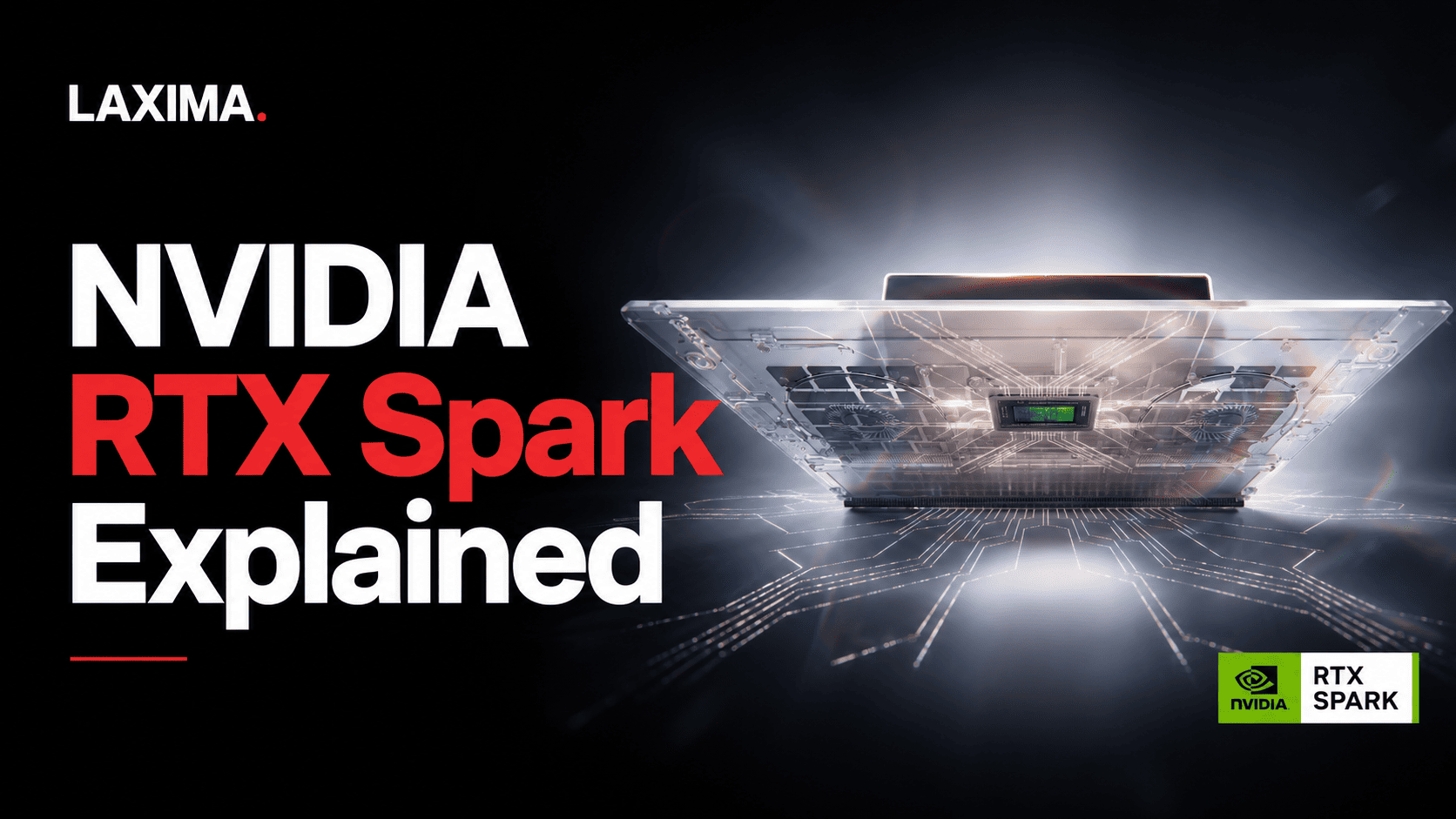
What is NVIDIA RTX Spark?
RTX Spark is NVIDIA’s new PC platform for slim laptops and compact desktops built around a single “superchip” design that combines NVIDIA AI acceleration and RTX graphics. According to NVIDIA, the platform targets AI development, creator work, gaming, and always-available local agents in thin mobile devices and small-footprint desktops.
The headline numbers from NVIDIA and coverage of the launch are ambitious:
Up to 6,144 Blackwell RTX GPU cores
Up to 20 CPU cores
Up to 1 petaflop of FP4 AI performance
Up to 128 GB of unified memory
Native CUDA support
Thin laptops and compact desktop systems
That combination is what makes the announcement notable. Many “AI PC” launches so far have centered on NPUs for lightweight assistants. RTX Spark takes a different position: if people want real local agents, multimodal models, creative acceleration, and developer-grade AI work, the machine needs far more memory bandwidth and GPU-class compute than a small assistant chip can provide.
Why RTX Spark matters beyond the product page
The competitor coverage focuses heavily on specs, creator messaging, gaming, and the idea that your PC becomes a “teammate.” That is directionally true, but incomplete. The bigger story is that RTX Spark tries to collapse four previously separate machine categories into one:
Portable creator laptop
Developer workstation
Gaming PC
Private local AI appliance
If successful, that changes how individuals and companies think about AI deployment. Instead of sending every task to the cloud, more of the stack can run on the endpoint: document search, coding agents, private summarization, multimodal processing, and selective cloud escalation only when needed.
That matters for three reasons:
Latency: local inference can feel instant for short tasks and iterative workflows.
Privacy: sensitive files do not need to leave the device by default.
Cost control: some workloads can shift away from metered cloud inference.
This is the same broader trend we have been tracking across enterprise automation and agent tooling: the winning systems are rarely purely local or purely cloud. They are hybrid. Local handles fast, private, routine work. Cloud handles heavy reasoning, broader integrations, and large-scale orchestration. If you want the strategic context, our guide on implementing agentic AI systems for business automation breaks down how that operating model actually works.
The core technical idea: one machine for AI, graphics, and memory-heavy workflows
The strongest technical claim around RTX Spark is not the petaflop number. It is the memory story.
Unified memory matters because local AI workloads are often constrained less by raw arithmetic and more by where the model, context, and data can fit. A system with up to 128 GB unified memory potentially opens the door to running larger local models, bigger context windows, or more complex multitasking without the awkward split between system RAM and limited VRAM.
That has practical implications:
A developer can run a local coding model, IDE, browser, containers, and test services on one machine.
A creator can edit video, use AI effects, and keep multiple large applications open without constant memory pressure.
An operations user can run a document agent, retrieval workflow, and business tools locally for privacy-sensitive tasks.
Coverage in the source set also mentions support for local models on the order of 120 billion parameters with very large context lengths. Treat those claims as directional until independent benchmarks arrive. The real question is not whether a model can technically load, but whether it runs fast enough to be useful at your preferred precision, context size, and concurrency.
Why FP4 performance is both exciting and easy to misuse
“Up to 1 petaflop FP4 AI performance” sounds enormous, and it is. But FP4 is a low-precision format. That number is most relevant for certain optimized inference scenarios, not as a universal indicator of user experience.
For buyers, a better checklist is:
How many tokens per second does it achieve on models you will actually use?
What happens under sustained load, not just short bursts?
How much performance drops in a thin laptop chassis?
What quantization and context settings are needed to hit those speeds?
This is a recurring AI infrastructure issue. Vendors advertise peak throughput, but workflow value comes from stable, sustained, real-world performance. We made a similar point in our analysis of inference economics in OpenAI Codex Spark: raw speed only matters when the surrounding system makes it usable.
Who should care about RTX Spark?
Not everyone needs this class of machine. But a few groups should pay close attention.
Developers building local or hybrid AI apps
RTX Spark’s appeal to developers is straightforward: CUDA compatibility, large memory ceilings, and the ability to prototype and test on the same category of GPU stack used across much of the AI ecosystem.
Useful scenarios include:
Running local coding agents
Testing RAG pipelines on-device
Evaluating multimodal apps without constant cloud round-trips
Prototyping model fine-tuning or distillation workflows
If your development setup increasingly depends on agentic tooling, the machine becomes part of the workflow architecture, not just a place to write code. For teams exploring that shift, our guides on setting up Cursor for agentic coding and Claude AI enterprise workflows show where local compute starts to matter.
Creators using AI in video, design, audio, and 3D
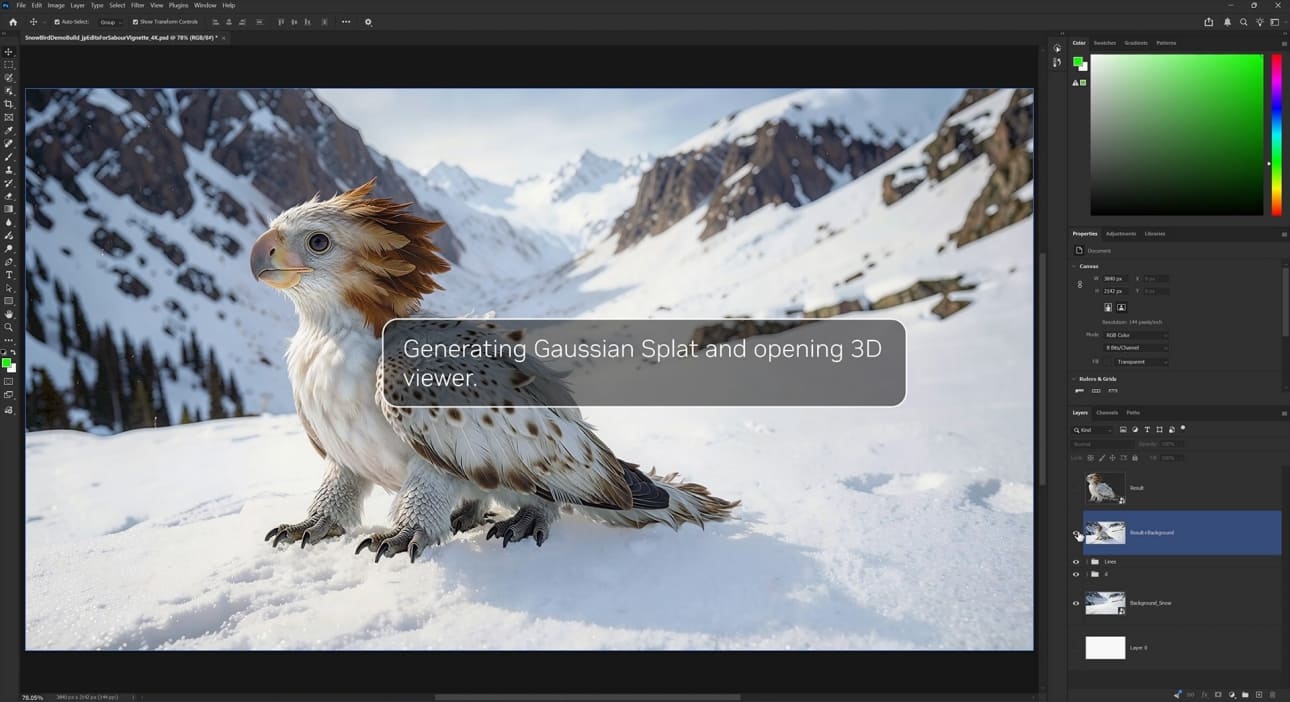
NVIDIA’s pitch to creators is one of the clearest parts of the announcement. RTX has long mattered in rendering, effects, and video acceleration. Spark extends that story by combining creator acceleration with local generative AI support in a thinner device category.
Examples where this could matter:
Video editing with AI-assisted transcription, masking, and enhancement
3D workflows using ray tracing and AI denoising
Streaming with local background cleanup, noise removal, and encode acceleration
Design workflows that combine local generation with existing creative apps
The value is not just speed. It is fewer context switches between “creative app mode” and “AI tool mode.”
Privacy-sensitive professionals and teams
This is the most underrated audience. Local AI is not just a convenience feature. It can be a governance feature.
When sensitive contracts, customer notes, source code, or internal reports stay on-device by default, organizations gain more control over where data goes and when cloud services are invoked. That does not eliminate risk, but it narrows the exposure surface.
That said, local does not automatically mean secure. You still need identity controls, application isolation, auditability, model policies, and clear fallback rules for when tasks should leave the device. On that front, the launch coverage mentioning Windows security architecture and runtime isolation is important, but we need details and real enterprise management tooling before declaring victory. If governance is your first concern, our analysis of Microsoft Agent 365 and agent sprawl is a useful companion read.
Gamers who also do real work
For pure gaming buyers, RTX Spark may or may not be the best value depending on price and thermal headroom. But for users who game and build, stream, edit, or code, the all-in-one proposition is compelling. One premium machine can serve multiple identities instead of forcing a separate gaming rig, work laptop, and AI box.
RTX Spark laptops vs compact desktops
NVIDIA is positioning Spark across slim notebooks and small desktops. The right choice depends less on preference and more on workload shape.
Form factor | Best for | Main advantage | Main tradeoff |
|---|---|---|---|
Thin laptop | Mobile creators, developers, consultants | Portability and battery life | Thermal constraints under sustained AI loads |
Compact desktop | Always-on local agents, home office, prosumers | Better sustained performance and 24/7 operation | Less portable |
LAXIMA’s practical rule: if your AI workflow runs in bursts and travels with you, get the laptop. If you want local agents running all day, indexing documents, monitoring folders, or processing jobs in the background, the compact desktop is often the smarter deployment target.
What local AI agents on a PC actually look like
The marketing phrase “your PC becomes a teammate” is catchy, but buyers need a more concrete picture. Here are realistic local-agent scenarios that make sense on a machine like RTX Spark:
Research assistant: watches a folder of PDFs, summarizes changes, and drafts a briefing note.
Coding copilot: indexes your repo, proposes changes, runs tests, and explains failures.
Creative prep agent: transcribes footage, tags scenes, generates rough cuts, and surfaces reusable assets.
Operations analyst: ingests exports from CRM, support, and finance tools, then drafts recurring reports locally.
Personal knowledge agent: searches notes, documents, and meeting transcripts without sending them to a third party.
These are all agentic patterns, but they require more than hardware. They need memory, tool access, policy boundaries, and data retrieval. That is why local compute by itself is not the full story. For example, many advanced agents fail not because the model is weak, but because they lose context across sessions. We cover that issue in detail in the AI agent memory problem.
What the launch materials get right — and what they leave out
The source materials do a good job highlighting these strengths:
Strong AI plus graphics positioning
Unified memory as a major differentiator
Local agent use cases
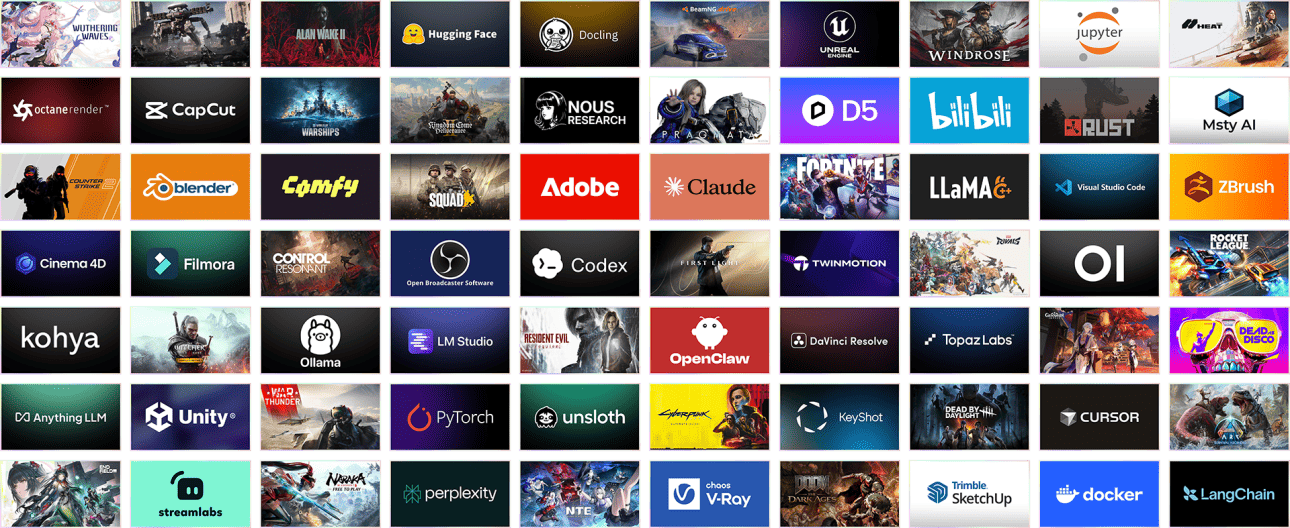
Creator and developer software ecosystem support
Battery efficiency and thin-device ambition
But they largely skip the harder buyer questions.
1. Sustained thermals
A thin chassis can be brilliant for short accelerations and still struggle under 30- to 90-minute AI workloads. Local model inference, video export, and coding-agent loops are exactly the kinds of tasks that expose sustained thermal behavior.
2. Real software readiness
“Hundreds” or “1,000+ accelerated apps and games” sounds impressive, but buyers should ask which workflows are materially faster, not just technically supported. The difference between compatibility and optimization is huge.
3. Enterprise manageability
If local AI agents are going mainstream, IT teams need policy controls for model access, data egress, permissions, logging, and remote management. Consumer-grade AI features are easy to demo and hard to govern.
4. Economics versus cloud
Local inference is not free. The cost moves from per-token billing to hardware acquisition, power, refresh cycles, and support. For many organizations, the best answer will still be hybrid rather than fully local.
How to evaluate whether RTX Spark is worth buying
If you are considering an RTX Spark system, evaluate it against workflow outcomes, not launch slogans.
Decision checklist
Primary workload: coding, video, design, local inference, or gaming?
Mobility needs: daily travel, occasional mobility, or fixed desk setup?
Privacy requirements: do important tasks need to stay local by default?
Model size needs: are you running lightweight assistants or genuinely large local models?
Software stack: do your core apps have meaningful RTX acceleration?
Budget: would one premium machine replace two or three separate systems?
Questions to ask before purchase
What are the independent benchmark results for the exact model I want?
How does performance hold up after 20, 40, and 60 minutes?
What memory configuration is included by default, and can it be upgraded?
Which AI workflows run fully offline?
What management and security features exist for enterprise deployment?
Which apps in my workflow are truly optimized for the platform?
Best-fit use cases by buyer type
Buyer type | RTX Spark fit | Why |
|---|---|---|
AI developer | High | CUDA stack, local inference, larger memory pool |
Video editor | High | Encode/decode, RTX acceleration, AI media workflows |
Enterprise knowledge worker | Medium | Useful if privacy and local agents matter, overkill otherwise |
Student | Low to medium | Powerful, but likely expensive relative to actual needs |
Gamer only | Medium | Depends on price and gaming benchmarks versus alternatives |
Operations team lead | Medium to high | Strong fit for hybrid automation and private document work |
The bigger industry shift: from AI assistants to AI-capable endpoints
The deeper significance of RTX Spark is strategic. It suggests the endpoint itself is becoming an AI execution layer, not just a screen for cloud services.
That opens up a new design pattern for software teams:
Keep sensitive context local
Run lightweight inference and retrieval on-device
Escalate only selected tasks to the cloud
Use the PC as an orchestrated node in a broader agent system
In other words, the personal computer starts to look less like a terminal and more like an edge runtime.
That does not kill cloud AI. It makes cloud AI more selective and more valuable. The future is not “everything local” or “everything remote.” It is policy-based distribution of intelligence across device, edge, and cloud.
Our take: RTX Spark is promising, but the proof will be in workflow benchmarks
NVIDIA’s announcement is compelling because it identifies the real bottleneck in many AI PC narratives: not enough memory, not enough graphics-class acceleration, and not enough seriousness about local workflows.
Where we would stay cautious:
Peak specs are not sustained experience
Thin laptops often underdeliver versus launch expectations
Software optimization always lags hardware launches
Enterprise control planes for local agents are still immature
Where we are optimistic:
Unified memory could make local AI genuinely practical on a broader class of devices
Creators and developers may finally get one machine that handles modern mixed workloads well
Privacy-sensitive AI use cases become easier to justify
Compact desktops for always-on agents are an underrated category
If RTX Spark systems hit the market with strong real-world benchmarks, they could become the reference design for a more serious generation of AI PCs.
FAQ
What is NVIDIA RTX Spark in simple terms?
It is a new NVIDIA PC platform designed for thin laptops and small desktops that combines AI acceleration, RTX graphics, CPU performance, and large unified memory for local AI, creative work, and gaming.
Is RTX Spark mainly for gaming or AI?
Both, but the launch positioning suggests AI and creator workflows are the bigger story. Gaming is part of the value proposition, not the whole point.
Why does unified memory matter for AI PCs?
It can make it easier to run larger models and memory-heavy workflows locally without being constrained by a small pool of dedicated VRAM.
Will RTX Spark replace cloud AI?
No. The likely future is hybrid. Local handles private, low-latency, routine tasks. Cloud handles heavier reasoning, larger models, and multi-system orchestration.
Who should wait for reviews before buying?
Almost everyone. In particular, buyers who care about sustained local inference, battery life under AI load, and thermal performance should wait for independent benchmarks.
What is the most interesting use case for RTX Spark?
In our view, it is not gaming. It is the ability to run useful private AI agents locally on a personal machine while still having the graphics and media performance for real work.